
Technology
Automatic Tunnel Car Wash Systems
A tunnel moves the vehicle through a sequence of fixed wash stages, so every car receives the same process — the format of choice for high-traffic sites.
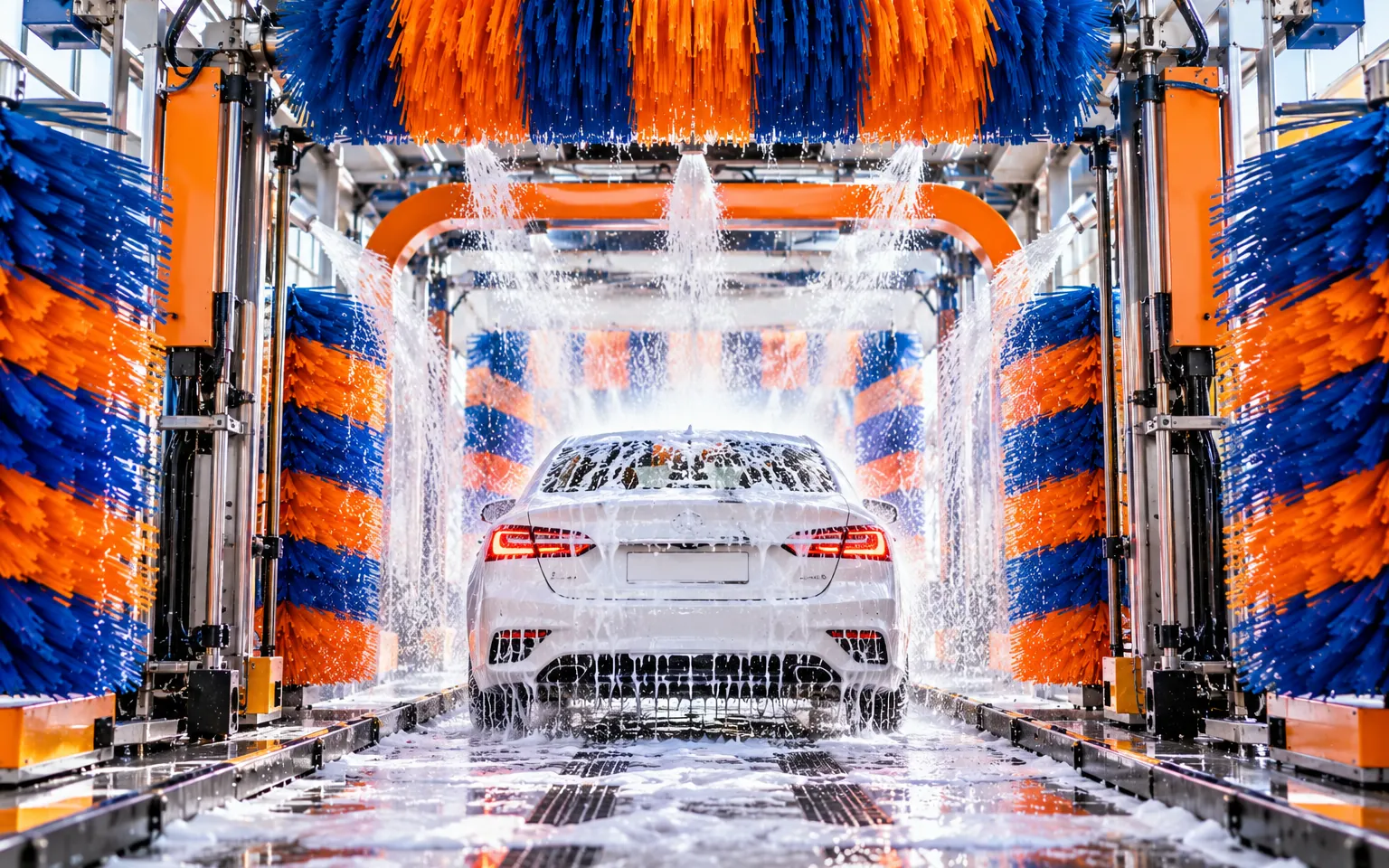
How a typical wash cycle runs
- EntryThe vehicle enters the designated wash area and is guided onto the conveyor.
- Positioning & safety checksSensors confirm vehicle position and profile before equipment moves.
- Wash stagesConfigured stages run in sequence — for example pre-soak, foam, brushes or high-pressure washing.
- Rinse & dryingRinsing and air drying are performed where the configuration includes them.
- ExitThe vehicle leaves through the designated exit route.
The exact process, number of stages and equipment depend on the selected machine configuration.
System components
Conveyor & guide rails
Moves the vehicle through the tunnel at a controlled pace.
High-pressure washing
Nozzle arches that remove loose dirt and treat wheels and lower panels.
Foam & shampoo application
Applies dosed chemistry to loosen and lift road film.
Brush or touchless stages
Brush stages or touchless options, depending on configuration.
Dryers
Blowers remove water from the vehicle surface at exit.
Control panel & sensors
Sequences every stage and enforces safety interlocks.
Learn moreTunnel vs. rollover vs. touchless
Conveyor tunnel
Several vehicles inside at different stages. Highest throughput; needs the longest plot.
Rollover / in-bay
Vehicle parks while a gantry moves over it. Compact footprint; one vehicle at a time.
Touchless
Relies on chemistry and high-pressure water rather than brushes. Results depend on chemical selection.
Machine dimensions, capacity and electrical load are confirmed by the DHULWA technical team for each configuration. Ask for a technical consultation to get figures for your site.
Talk to our technical team
Fields marked optional can be left blank. You will receive a reference ID after submitting.