· Knowledge Centre
Tunnel, Rollover and Touchless: How Automatic Car Wash Systems Work
The three main automatic wash formats, what happens at each stage, and how to decide which one suits your site.
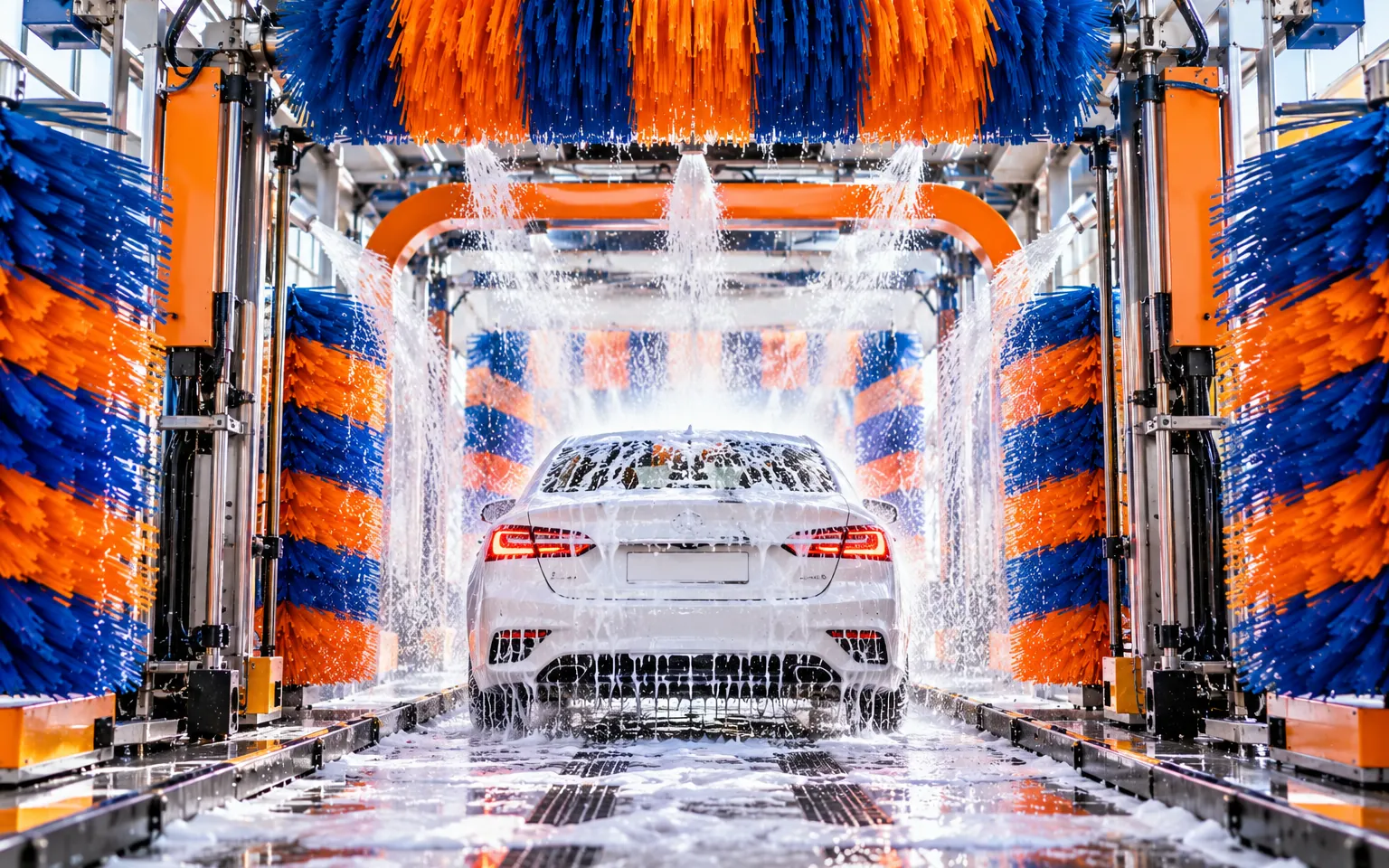
“Automatic car wash” covers several different machine types. Knowing the difference helps you ask the right questions before you buy.
Conveyor tunnel
The vehicle is guided onto a conveyor and moves through fixed stations. Several vehicles can be inside the tunnel at once, each at a different stage, which is why tunnels are chosen for high-traffic sites. They need the longest plot.
Rollover (in-bay)
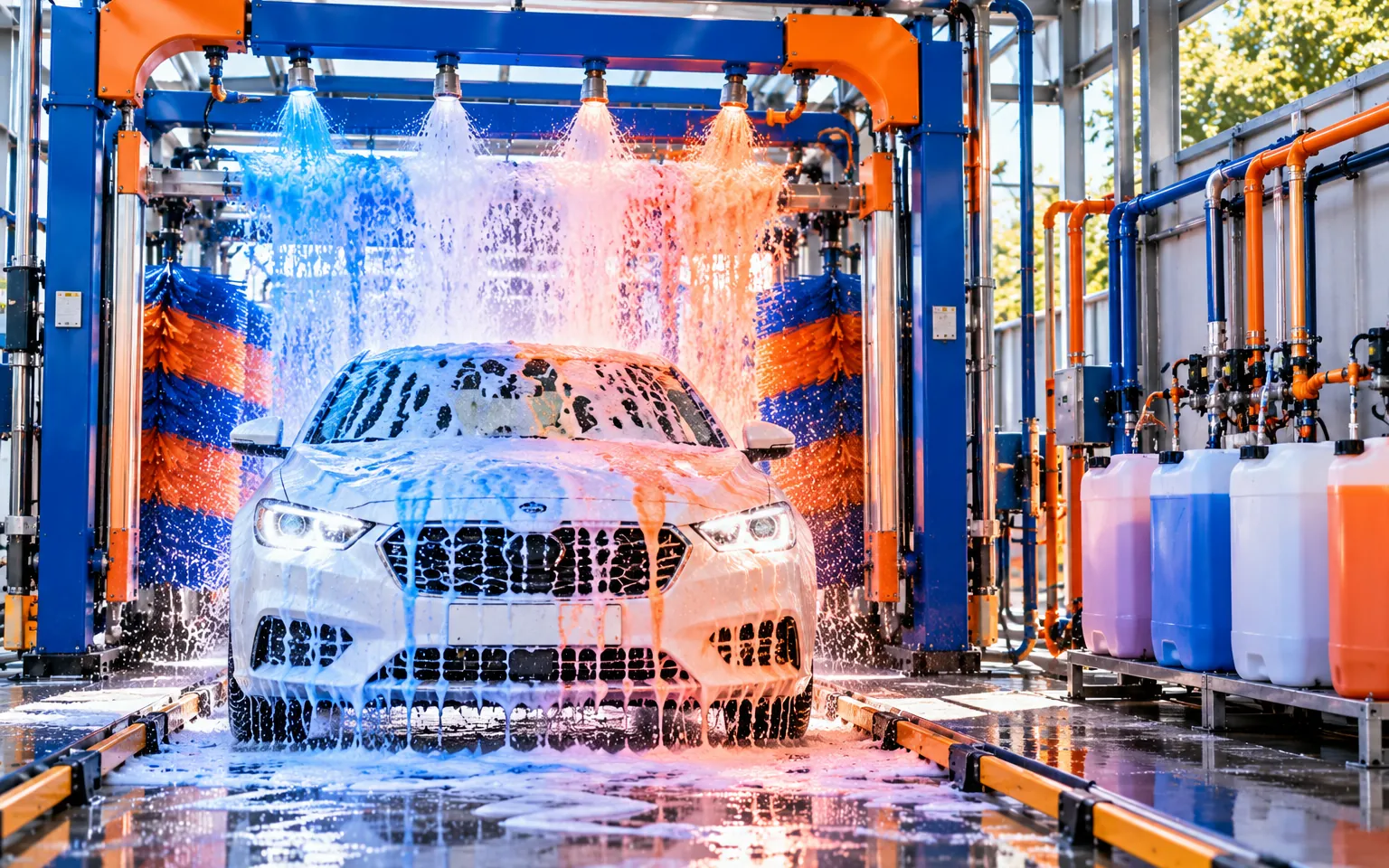
The vehicle parks and a gantry moves back and forth over it. Rollovers fit compact sites such as fuel-station corners and dealership service bays, but wash one vehicle at a time.
Touchless / high-pressure
Instead of brushes, touchless systems rely on chemistry and high-pressure water. Some operators prefer them for vehicles with delicate finishes; cleaning performance depends heavily on chemical selection.
Typical wash stages
- Vehicle positioning and safety checks
- Pre-soak to loosen dirt
- Foam or shampoo application
- Brush or high-pressure cleaning
- Rinse, often with treated or softened water for the final pass
- Air drying
Not every system includes every stage. The exact sequence depends on the configuration selected for your project.
This article is general information, not legal, financial or engineering advice for a specific site. Illustrations are representative.